Taxes and Law
Why is Gold Tax-Free and Silver isn't?
Key facts at a glance
- Investment gold is exempt from VAT in Germany and across the entire EU.
- The reason is legal: gold is treated as a financial investment, not as goods.
- Silver counts as an ordinary commodity with an industrial character and is therefore subject to 19% VAT.
- For certain silver coins, the margin scheme reduces the effective tax burden.
Don't have any precious metals in your portfolio yet?
Discover coins, bullion, and much more in our online store.
The short answer first
The tax exemption doesn't apply to gold as such, but to a clearly defined category: so-called investment gold. If a gold bar or gold coin meets the legal criteria, no VAT applies when you buy it. Silver has no comparable special rule, so it's generally taxed when purchased.
The decisive factor, then, isn't the material value or rarity, but the legal classification of the two metals — and that classification differs significantly.
Why is gold exempt from tax?
For centuries, gold served a money-like function and formed the basis of many monetary systems. Because of this history, lawmakers today treat investment gold more as a financial asset than as a consumer good. The aim is to treat gold the same way, tax-wise, as other financial investments, such as securities, which also carry no VAT.
This equal treatment is regulated across Europe. An EU directive from the year 2000 introduced a uniform VAT exemption for investment gold across all member states. In Germany, it's set out today in Section 25c of the German VAT Act (UStG). Under this rule, the supply, import and acquisition of investment gold are tax-free, so that your money goes fully into the metal rather than into levies. Exactly which gold bars and gold coins qualify is precisely defined by law.
Why does VAT apply to silver?
Silver doesn't enjoy this special status. Legally, it counts as an ordinary precious metal with the character of goods, similar to other commodities. A major reason for this is its heavy industrial use — a large share of silver is processed into electronics, solar panels and other products.
Because silver isn't classified as a pure investment product, the standard tax rate applies. In Germany, silver bars and conventionally taxed coins carry 19% VAT on the full purchase price. This explains why the same investment amount in silver initially looks more expensive to buy than the equivalent in gold.
For your return, this means the silver price first has to rise by the amount of tax paid before the purchase pays off. Over a long-term investment, this effect barely matters; for short-term purchases, though, you should factor it in from the start.
Which gold is tax-free?
The exemption only applies to gold that meets the legal criteria for investment gold. This is meant to ensure that only genuinely investment-oriented products benefit — not, for example, jewellery. The exact requirements are set out by the Federal Ministry of Finance.
| Form | Requirement for tax exemption |
|---|---|
| Gold bars | Fineness of at least 995/1,000, recognised weight |
| Gold coins | Fineness of at least 900/1,000, minted after 1800, legal tender, selling price no more than around 80% above the gold value |
Well-known investment coins such as the Krugerrand, the Maple Leaf or the Vienna Philharmonic meet these conditions and can therefore be traded tax-free.
How can the tax on silver be reduced?
With silver, you can't avoid the tax entirely, but in some cases you can reduce it. Under the so-called margin scheme, VAT isn't charged on the full price, but only on the dealer's trading margin.
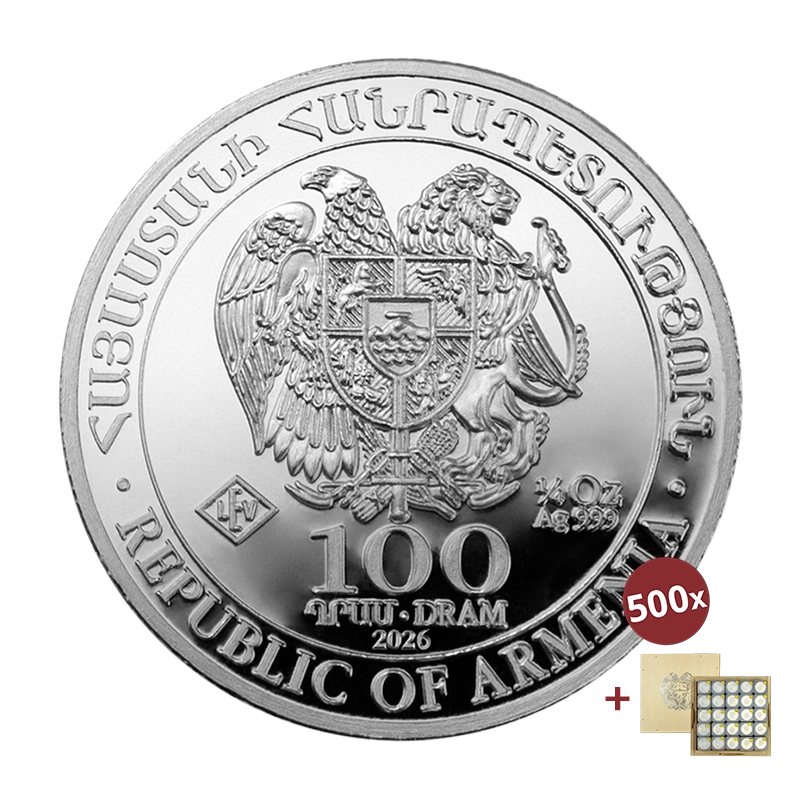
This mainly affects certain silver coins, for instance those from non-EU countries. As a result, the effective tax burden is noticeably lower than the full 19%. Which variant applies in an individual case depends on the coin and its origin.
And what about selling?
Gold and silver are treated differently when you buy them, but the same rule applies to both when you sell. Here, it's no longer about VAT, but about income tax on any profit you make.
If you later sell physical gold or silver at a profit, the holding period is what matters. If more than one year passes between purchase and sale, the profit remains tax-free under Section 23 of the German Income Tax Act (EStG). If you sell sooner, the profit counts as a private disposal transaction and is taxable once it exceeds the annual exemption limit.
It's worth knowing that no flat-rate withholding tax, as applies to shares, is charged here. Instead, the profit is reported as other income in your tax return. The one-year rule applies equally to both metals — so the tax difference really only concerns the purchase.
Summary
Gold is tax-free because it's legally classified as a financial investment; silver isn't, because it's classified as a commodity with an industrial character. If you're unsure which precious metal best suits your tax situation and your goals, we're happy to advise you personally.
Frequently asked questions
Does the tax exemption apply to every gold coin?
No. Only gold that meets the criteria for investment gold is tax-free. Pure collector's coins or gold jewellery may be excluded and are then taxed.
How much VAT applies to silver?
Silver bars and conventionally taxed coins carry 19% VAT. For coins taxed under the margin scheme, only the dealer's margin is taxed, which results in a lower burden.
Is platinum or palladium also tax-free?
No. The tax exemption applies exclusively to investment gold. Platinum and palladium are treated as industrial metals, like silver, and are subject to VAT.
Since when has investment gold been exempt from VAT?
The EU-wide exemption has applied since 1 January 2000. Before that, taxation was handled differently from country to country; since then, it has been uniformly regulated across the entire European Union.
Don't have any precious metals in your portfolio yet?
Discover coins, bullion, and much more in our online store.